
What is periodontology?
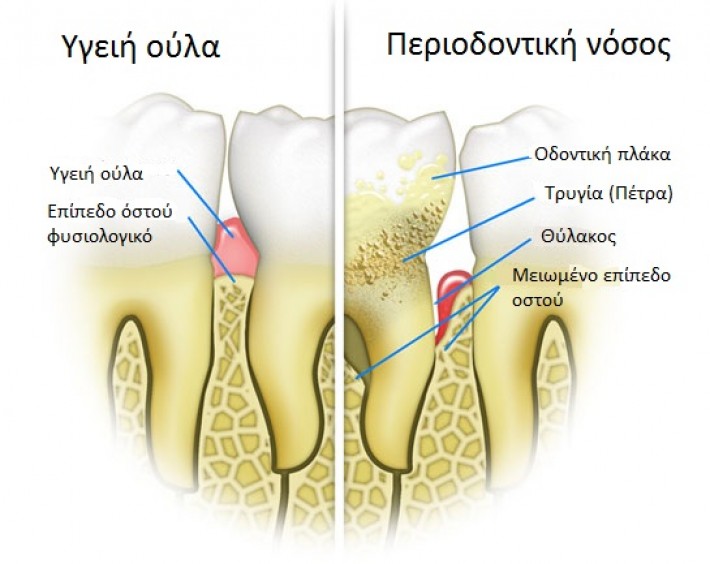
Periodontology is the field of dentistry that deals with the prevention, diagnosis and treatment of diseases of the periodontium, that is, diseases of the supporting tissues that surround the teeth. The periodontium consists of the gums, the periodontal ligament, the alveolar bone and the cementum. The most common conditions are gingivitis, periodontitis and gum recession. The principal and most usual cause of these conditions is the accumulation of bacterial plaque. Gum diseases are responsible for the loss of most teeth.
Teeth lost to periodontitis can be replaced with Dental Implants or Bridges.
When should I see the dentist?
Periodontal diseases are “insidious”, without marked symptoms, and progress quietly because, owing to their chronic nature, acute symptoms (pain and swelling) do not appear, and so in most cases the diagnosis is incidental and is made when the patient attends the practice for some other reason.
Early signs are:
- bleeding when brushing or flossing
- redness of the gums, which is a sign of inflammation
- swollen gums
- an unpleasant taste or breath
- or you may not notice any symptom at all
Later symptoms include:
- denudation of the roots from the bone and gums, so that the teeth look “longer” because the roots are exposed
- sensitivity to cold
- abscesses
- “loosening” or mobility of the teeth
- and ultimately loss of the teeth
Main risk factors for the development and progression of periodontal disease
- Smoking
- Diabetes mellitus
- Poor oral hygiene
- Crowding of the teeth
- Immunosuppression
- Systemic diseases that impair the body’s defences
Types of gum disease
Untreated gingivitis can progress to periodontitis and ultimately lead to tooth loss and other health problems.
Periodontal diseases, including gingivitis and periodontitis, are serious infections which, if left untreated, can lead to tooth loss. The word periodontal literally means “around the tooth”. Periodontal disease is a chronic bacterial infection that affects the gums and the bone that support the teeth. Periodontal disease can affect one tooth or many teeth. It begins when the bacteria in dental plaque (the sticky, colourless film that constantly forms on your teeth) cause inflammation of the gums.
Gingivitis is the mildest form of periodontal disease. It results in the gums becoming red, swollen and bleeding easily. There is usually little or no discomfort at this stage. Gingivitis is often caused by inadequate oral hygiene. Gingivitis is reversible with professional treatment and good oral care at home.
Untreated gingivitis can progress to periodontitis. Over time, plaque can spread and grow below the gum line. The toxins produced by the bacteria in plaque irritate the gums. The toxins encourage a chronic inflammatory response in which the body essentially turns against itself, and the tissues and bone that support the teeth collapse and are destroyed. The gums detach from the teeth, forming pockets (spaces between the teeth and gums) that become infected. As the disease progresses, the pockets deepen and more gum tissue and bone are destroyed. Often, this destructive process has very mild symptoms. Eventually, the teeth may loosen and may need to be removed.
There are many forms of periodontitis. The most common include the following.
- Aggressive periodontitis: seen in patients who are otherwise clinically healthy. Common features include rapid attachment loss and bone destruction.
- Chronic periodontitis: results in inflammation of the supporting tissues of the teeth, progressive attachment loss and bone loss. This is the most frequently occurring form of periodontitis and is characterised by pocket formation and/or recession of the gums. It is prevalent in adults, but can occur at any age. Worsening of attachment loss usually occurs slowly, but there may also be periods of rapid progression.
- Periodontitis as a manifestation of systemic diseases: often begins at a young age. Systemic diseases such as heart disease, diseases of the respiratory system and diabetes are associated with this form of periodontitis.
- Necrotising periodontal disease (acute necrotising ulcerative gingivitis–periodontitis): is an infection characterised by necrosis of the gingival tissues, the periodontal ligament and the alveolar bone. These lesions have been observed more often in people with systemic conditions such as HIV infection, malnutrition and immunosuppression.